“How to Love Living Things” by Meg Stein

Uncategorized
How To Love Living Things
Solo Exhibition by Meg Stein
Opens Friday, May 20th, 6-9pm
Runs May 1-June 4
Show title borrowed from the poem “A Child Without Arms Running Through a Field (Wyoming)” by Rachel McKibbens, published in her book Into the Dark & Emptying Field.
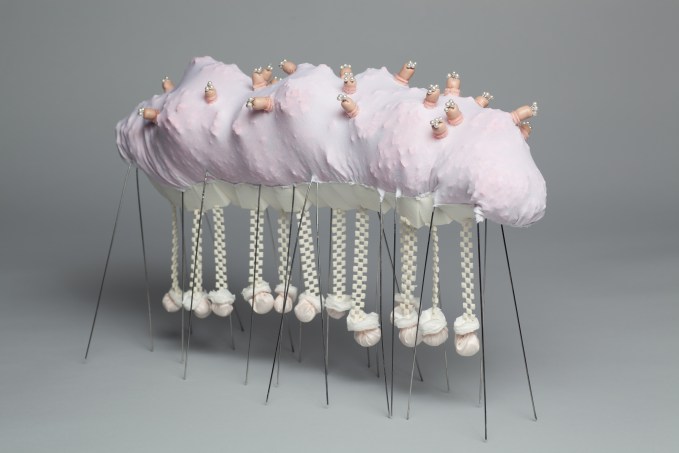
No Shame in Wanting-largeNo Shame in Wanting, 18” x 26” x 10”, 2016, erasers, nylon stockings, cosmetic wedges, no-slip rug mat, diapers, women’s slip, pillow stuffing, ear plugs, sewing pins, hair curlers, egg whiskers
Through repetitious processes that reference “women’s work,” I transform implements of domesticity into startling, otherworldly forms. These biomorphic sculptures oscillate between dream and nightmare, mimicking known life—such as sea life and reproductive organs—while remaining alien.
My sculptures transform everyday detritus—loaded with social assumptions about gender and class roles—into bursting, unknown life, complete with ambiguous new gender classifications and power hierarchies that are full of potential. Unsettling interrogations of feminine stereotypes, they collapse the space between comfort and threat.
Pillowcases, sheer stockings and bath loofahs become bulbous appendages, glistening orifices and billowing innards. Bath mats that once kept human feet dry are re-imagined as vital tentacles used for collecting food.
My work is inspired by an absurd, futuristic vision: Imagine that you leave your household items in the woods with a group of women for five million years and, through their simple labor, the women evolve these items into evocative, feminine oddities, a marriage of wild and domestic.
Propelled by this vision, I dissect and reconstruct household accoutrements into fantastic and psychological sculptural organisms. My work anticipates a sensual, soft-edged world, punctuated by a ‘post-metamorphosis’ of gender roles.
—Meg Stein, 2016
Meg Stein is a sculptor, animator and installation artist from Durham, NC. Most recently her work has been exhibited in Portland (OR), South Carolina, Louisiana, North Carolina, Atlanta, Brooklyn, and Philadelphia. In 2016 she was in residence at Yaddo in Saratoga Springs, NY. She has been an Artist-in-Residence at the Atlantic Center for the Arts in New Smyrna Beach, FL (2014), at “Wetland” by Mary Mattingly in Philadelphia’s FringeArts (2014), a Regional Emerging Artist-in-Residence at Artspace in Raleigh, NC (2014), a resident artist at the Virginia Center for the Creative Arts in Amherst, VA (2015) and an Artist-in-Residence at the Indie Grits Film Festival in Columbia, SC (2015).  She was a participant in New York Arts Practicum in 2014, working with Simone Leigh. In 2012 she won the David A. Dowdy Jr. Award for Sculpture, was nominated for the International Sculpture Center’s Outstanding Student Achievement in Contemporary Sculpture Award (2014), won a merit scholarship for the Ox-Bow School of Art in Saugatuck, MI (2014) and won 3rd place in the National Compact Competition at Louisiana State University in Baton Rouge, LA (2015). She earned her MFA in Studio Art from UNC Chapel Hill in 2014. More information is available at megstein.com. You can contact her at meg.stein.artist@gmail.com.

“The Touch Room” Opening April 15th 6-9pm

Uncategorized

Be “in touch” and visit Friday, April 15th, 6-9pm, for Danielle McCleave’s solo exhibition.

Read the conversation between her and Sibley Barlow, our writer-in-residence about the show.

Danielle McCleave is a young artist wrapping up her final moments with Belmont College of Visual Arts. Her current installation work explores themes of personal space, intimacy, and human interaction. In her upcoming show, viewers will no longer be viewers, but agents of an event. Danielle is setting up a space for us to engage with one another in a way that reaches beyond our everyday interaction. Below is a slightly condensed interview with the artist discussing her thesis exhibition at Ground Floor Gallery.


S: Well first of all, let’s hear about your piece. Can you explain how the idea originated?


D: My piece is basically a commentary on touch, and the personal space bubble of humans in our society. About two semesters ago I studied abroad in Italy, the fall semester of my junior year. I just really realized how small their personal space bubble is there, compared to ours here in America – which is really interesting to me. I was walking down the streets, and first of all, the sidewalks are really small there anyway, everything is small there, it’s just a tiny place. And you’re on this small sidewalk and people are just passing by you like “School’s out, school’s out!” and they bump you and touch you and they greet you with a kiss. And there’s not really a concept of a line, but it doesn’t bother anyone. Everyone kind of just touches each other and they will talk to you up close; that is their space. It’s just a different in comparison to America. We’re very distant to the point of being sterile, and I think that is hindering us a little bit especially in childcare. I nanny a lot, and so that’s where a lot of my ideas come from. Kids in America, like in a kindergarten class, if a one of them falls over I can’t kiss his boo boo because it’s “gross.” But of course, I mean, it’s a child. But the precautions and the ideas have been perverted in our society. At a baseline it’s become a little too sterile, in my opinion. I at least wanted people to realize how different it is from other places in the world. So with my piece I want to, kind of, break that bubble, in a fun and interactive way. And I like my work to be very open, I never want it to feel cut off. For example, one of the things I absolutely love is touching art. I like my art to be touched, even if at some point in the future it will physically destroy my art I think it would have been for the benefit, because at least it was able to be interacted with.


S: Did this idea hit you while in Italy experiencing that?


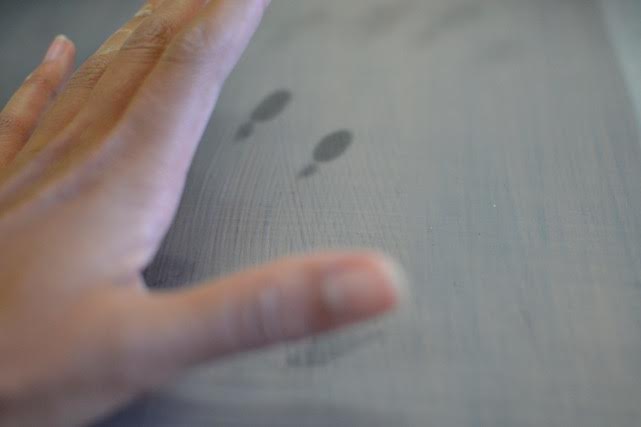
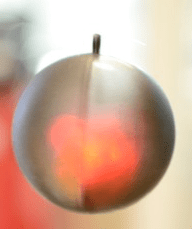
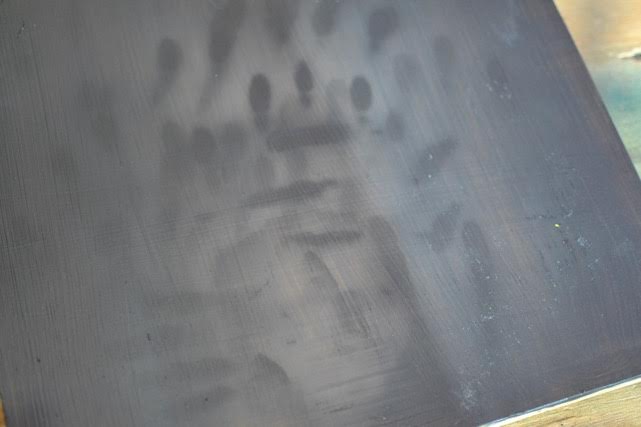
D: No. I just woke up one morning, like 6 in the morning and sketched this out in my sketchbook, went back to sleep, and never thought about it again until I was told that I needed to get a start on this thesis. So I just went back and worked off of that. My very first project was to have a very dark room that would have finger-like extensions or little things that would touch you and it could give the sensation of gently being touched or caressed. That evolved into this piece with the hanging balls because I wanted each finger or extension to light up as if it were your neurons lighting up when you touched them, you know, and so that’s what that turned into. I made this sort of hallway and so you can see people going through it, walking through it, but also be a part of it in the same way. The other part is a wall with thermochromatic paint so you can see your handprint, your touch on a surface, to make it sort of physical – that which normally can’t be seen. The way you touch someone and what that feels like. As if every time you touched someone, it left a handprint on their body. So I made a wall and two platforms on the ground so if you were to take off your shoes and walk on it you could see your footprints. The fourth piece is basically a giant touch lamp and it’s sort of a closet/hallway, but it’s open, and metal on all four sides. Viewers will walk inside of it but everytime you touch a side, the light will go on and off, so you can squeeze by a bunch of people in a crowd and the light will on and off.


S: And it’s going to force people to also touch each other?


D: Yes, that’s the goal. I also have another piece that is a performance piece which I am actually shooting today, and that will just show basically the same concept of visualizing our touch on people around us – using color. Each person will have a particular color and when you touch someone they get a little bit of that color, you know? That will be projected on the wall.


S: Well I’m pretty excited to see this become a reality.


D: It’s exciting but terrifying, like anything else in art. I’ve been working on this for over a year now, so we’ll see.


S: So around this time last year you started on it?


D: Yeah, I’d say so. Maybe a little earlier. I’ve been forming this piece and trying to kind bring it to life. I always feel a kinship to God in art, in that we are able to create the way God has created so we get that same experience. Artists have that same job that God fulfills. (Laughs) It is true though. It is that gift to create and make things that are brand new which is cool you know?


S: Do you find that there is spirituality in your work? Not necessarily religion but that essence of a bigger presence?


D: Yeah, I try to definitely try to have some sort of spirituality. I have a sense of at least some form of spirituality in there, partially because I do identify as Christian. I usually try to get a lot of my motivation from the religious environment. I’m a little bit of a liberal christian so I turn to nature often. I really listen to the environment and everything that surrounds me. I feel like just that spirit, listening to the world happening around us and trying to wake people up to it and draw their attention to it is what comes out in my art. At least what I want to bring out. Opening eyes to the every day of what’s around us.


S: What was your childhood experience with art like? When did you know you wanted to be an artist?


D: I was always doodling and painting. But my dad is an engineer, my mom is a teacher. My mom was always very open to it and encouraged it in me. My dad as well, but he took it more to the engineering direction. I just knew I always liked painting but I never thought of it as a career until maybe high school when I took architecture. That was more because I was thinking of the financial security of it. But when I took the class I realized how much I hate sitting there drawing straight lines. It just got really boring. My senior year I ended up winning some drawing competitions, and that encouraged me. But it was something I just had to figure out that I wanted over time and just sort of forget everything else, dive in, and make it happen.


S: Is there a part of you that is still interested in architecture? You’re pretty focused on installation work, and this piece in particular is pretty architectural.


D: No, well maybe.


S: Because you are obviously focused on people, but does the space they inhabit have significance as well?


D: I find fascination in architecture and the beauty of it. But I don’t think I would ever want to be the person behind it, designing it. I do love it on a small scale, with the installation work. I don’t have set media for my art, I just start with an idea, and then I need a way to explain it. So I pick media that suits it from that point. Sometimes it’s painting, sometimes it’s photography, sometimes it’s an installation. My concentration is on the idea. Which I also find very freeing, I don’t have to be stuck behind the stigma of, say, a photographer. That works for some people, but I’m just going to do it all, and everyone will have to be okay with it.


S: So you’re from Orlando, and you lived there for quite a while I’m assuming?


D: I lived there for the first part of my life, and then I moved to Dallas TX. Always lived in the city, always been around people. Nashville is the smallest city I’ve ever lived in. I work downtown, I love the energy of the city and being around a crowd but at the same time open space and nature. Which is interesting because that’s not what I was brought up in.


S: So what sort of influence do you think that has had on your art – being around that community?


D: I think it does have a lot to do with it. Being around that many people of different cultures and the realities of that. I never knew a stranger growing up with my mom, because that’s just how she is, everyone on the street is a friend. We would pick up random people off the street often and give them rides. I would be a two year old in the car seat next to them saying hello. You talk to everyone, everyone is family. Of course be safe, be cautious, but never assume a person is a stranger to you. I try to show that in my art or at least use it.


S: Use it as a way to connect people and get them back to that point?


D: Yeah definitely. In cities it can be very isolating and very lonely yet at the same time you are surrounded by so many people. But it doesn’t have to be that way, which is interesting. So I try to go the opposite direction, you can either embrace everyone and deal with all that energy, or let yourself be isolated. And I obviously do need that space at times to be by myself, but I get energy from people.


S: So simultaneously being alone while being amongst everyone else – that is a very interesting thing to think about. It’s very human, I think everyone finds comfort in that dynamic.


D: Yeah, it’s a really great paradox.

S: What are you going to do after this? As far as your show goes, do you feel like this will be resolved by the time you’re done with it, or is there more to explore?


D: As of now I feel it’s resolved. Partly because I’ve been working on it for a year now and it’s time to leave it alone. It is also an “assignment” as well so part of me, the rebel in me, wants to reject it for that reason. I do want to explore it more and figure out how to complete it in the way I originally visualized it. Like with any art piece, I go through so many modifications, so many trials and errors, nothing is how it was when I first thought of it. And so it is also wonderful, going through that process. Finding those issues and resolving them, and figuring out that it’s not actually resolved, redoing it, going back over everything, completely erasing it, crying (Laughs). So that process is so important, and I think it’s a really important part of my work to talk about. There are so many pieces out there in the world that have been through so much trauma in order to get out into the world, and I love that. So I think I can still go deeper into it, but not right off. I may do something else for a little while and come back to the idea at a different time, reassess, see if I even still believe in it.


Danielle McCleave’s “The Touch Room”

Uncategorized

A gallery is so often a “hands off” space, but for Danielle McCleave’s “The Touch Room,” people are encouraged to interact with the artwork and each other. The culture in the U.S. in particular isn’t used to physical contact, and “The Touch Room” is built to counteract the sterility of social interaction we experience in the USA and in a gallery.

See what Danielle has to say:

“Above all, we must cherish the relationship between one human to another, and specifically the instances of physical touch. Our culture has become so cripplingly sterile and so cautious that we emphatically discourage touching each other, and encourage distancing ourselves from one another.

Humans need each other and physical interaction to survive not only mentally, but also physically. Studies have shown that a simple touch from one human to another releases endorphins and lowers blood pressure.unnamed-2

While I was abroad in Europe, I noticed how different their culture is from ours, and how distant Americans are from each other. The cultures I encountered encouraged touch; habitually, everyone is greeted with a kiss, and people even stand closer to each other in public places. The “personal space bubble” that America puts so much emphasis on is not as present in their culture, and they greatly benefit from this.

unnamed

That’s why I wanted to create a space that would allow a sense of comfort to happen within the interactions with strangers. With “The Touch Room,” I’m wanting to pop that “bubble” by encouraging human-to-human touch, and the sensation of physical contact to promote comfort in relationships with people.

unnamed

I was born in Orlando Florida, and then moved on to Dallas, Texas before coming to Nashville to study art. I have always been fascinated with the tendencies of humans and the similarities and differences between cultures. Growing up in such different, major metropolitan cities allowed me to experience both proclivities–to touch and avoid touch–and I became comfortable with strangers and large amounts of people at a young age. I continue learning about the world and the people we all share it with through my participatory artwork and projects.”

When was the last time you touched another human being? Come see and touch at Ground Floor Gallery + Studios for the opening reception of “The Touch Room” on April 15th from 6-9PM.

Resurface Opens and Year in Review!

Uncategorized

With a new year, comes a new round of shows, starting with Resurface by Amanda Joy Brown, opening tonight, February 6th from 6-9pm. Please join us during the artist’s reception! Mandy has been developing this new series in her studio here at Ground Floor for 3+ years and it’s absolutely amazing to see the breadth she’s created with her paint skins.

Looking back, Ground Floor Gallery + Studios wants to thank everyone who has participated in and supported our gallery and studio collective. 2015 was a stellar year, it brought new studio artists, new interns, and some truly fantastic shows by very talented artists. Bobby Becker, Jovanni Luna, Kanchan Richardson, and Celeste Jones all joined the Ground Floor Family, but we had to also say good-bye to Heidi Martin Kuster, Marion Cox, and Evelyn Walker who played important roles while with us.

In review of our 2015 shows:

Andee Rudolf and our participatory mural

Evelyn Walker curated Dispatches from the Borderlands with works by Jeremy Entwistle and Barbara Schreiberwebsite

System Politics by Morgan Higby Flowers 

Taking Things Apart by David Willburn

Desiré HoughRotting Piñata

Bricolage: A Gallery Presentation of GfG’s Artists and Open Studios

Shana Kohnstamm curated Touched.

4th annual juried show, Mark, curated by Adrienne Outlaw, included

Rounding out the year with Exurban a large scale installation by Jason Sheridan Brown and Leticia Bajuyo.

Stay tuned…more solo, small group and juried exhibitions coming in 2016!

Morgan Higby-Flowers @ TSA Project in Miami

Uncategorized


Visit after Bacarach at the Ocean Terrace Hotel in Miami this week and see one of Ground Floor’s studio artists, Morgan Higby-Flowers. He along with Virginia Griswold, Arial Lavery and Paul Collins, from Nashville’s Coop  are a part of Tiger Strike Astroid‘s “Artist-Run.” Their installation takes place in a stripped down hotel room that they remade to look like a hotel room again–a perfect palate where couples’ artwork intersects.

Exurban Opens Dec. 5th 6-9pm

Uncategorized

This week at Ground Floor Gallery, in cooperation, Leticia Bajuyo and Jason S. Brown will create new work from the mainstream cycle of capitalist consumerism to hybrids of landscapes that are impacted and altered by industrial processes. Together their work will combine bright industrial colors with raw earth materials. Installing the work will be a response to the space at GfG, while simultaneously advancing a shared dialogue about suburban development, land use and consumerism. Visit with us on Saturday Dec. 5th, between 6-9pm, to contribute to their conversation. Runs through January and we are open most Fridays from 4-7pm or by appointment.

Open Studios Potluck, “Best of Show” named, and Exurban Opens

Uncategorized
 IMG_5307
Thanks to all who came to see Mark! Join us again this Saturday, Nov. 21st, between 3-5pm for an Open Studios Potluck and visit with GfG artists in their natural habitat. Mark artist, Mandy Cano Villalobos, will be back to finish pulverizing her brick.
ontheroadsm
Also, please help us congratulate “Best in Show,” Katie Hargrave and look for her upcoming solo exhibition in 2016.
LAL LOST 2015 for 618 KMAC Prefab inside 2
Exurban, by Leticia Bajuyo and Jason S. Brown, is a cooperative, site-specific installation and ongoing conversation between them about consumerism, land use and suburban development. Exurban opens with an artists’ reception December 5th from 6-9pm.

Mark opens Saturday, Nov. 7th, 6-9pm

Uncategorized
Turing Test

Turing Test, detail, Anders Johnson

Mark is an exhibit of eleven works by nine local and national artists, is like taking a road trip through the physical and psychological landscape of the United States. A branded pig, the American flag, audio books, paintings and photographs experienced along the way display a deep concern for the vulnerable.

During the opening, 6-9pm, Saturday Nov. 7th, Mandy Cano Villalobos meditatively hand-grinds a red brick into dust, the pile of which she leaves for future visitors. The pig is also hers. Marked with designs appropriated from the Cuzco school, which for purposes of religious conversion in the 16th century, taught indigenous people along the Andes European painting techniques, the pig represents both the sacred and the filthy.

Physical and emotional degradation marks Jenny Day’s haunting landscape of empty, dark interstate bridges both cut and supported by thick bands of ochre. Red, rather than green serves as the ground. Day’s color choice shares a palette both with that of the Cuzco school and with fellow Mark artist John Bruno. The three stacked yellow circles in his painting, Disheartening Loss Means War, reads like a cautionary traffic light, warning of potential danger ahead. A piece by photographer and experimental psychologist David Pittenger continues the theme. In Reno Two PM, thick shadows playing across a sea of empty apartment balconies form a complex grid and turn the building into a cage.

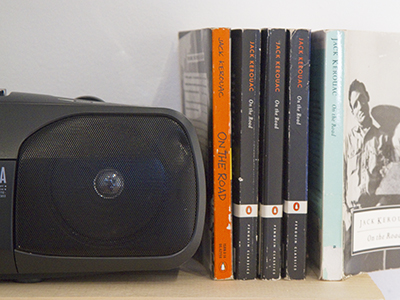
Based on a road trip across America, the novel On the Road by Jack Kerouac is considered a defining work of the postwar generation. Katie Hargrave made five customized versions by recording only the underlined sections she found in various copies of the book. Anders Johnson’s painting adds to the driving experience. Housed in a factory, a police cruiser and a wrecked car sit just past the dashboard of an empty automobile.

Flags comprise a quarter of the show-more perhaps if you read the red and white lines in Bruno’s painting as a political symbol. Laura McAdams bowling ball anchoring a flag balloon symbolizes both holding up and holding back progress. Katie Hargrave joined — or divided — an American and Mexican flag with the snaking line of the Rio Grande. She took the photo in Texas. A flag also juts out over the balcony and points to a clock in a black and white photograph by Jesse Kilmon.

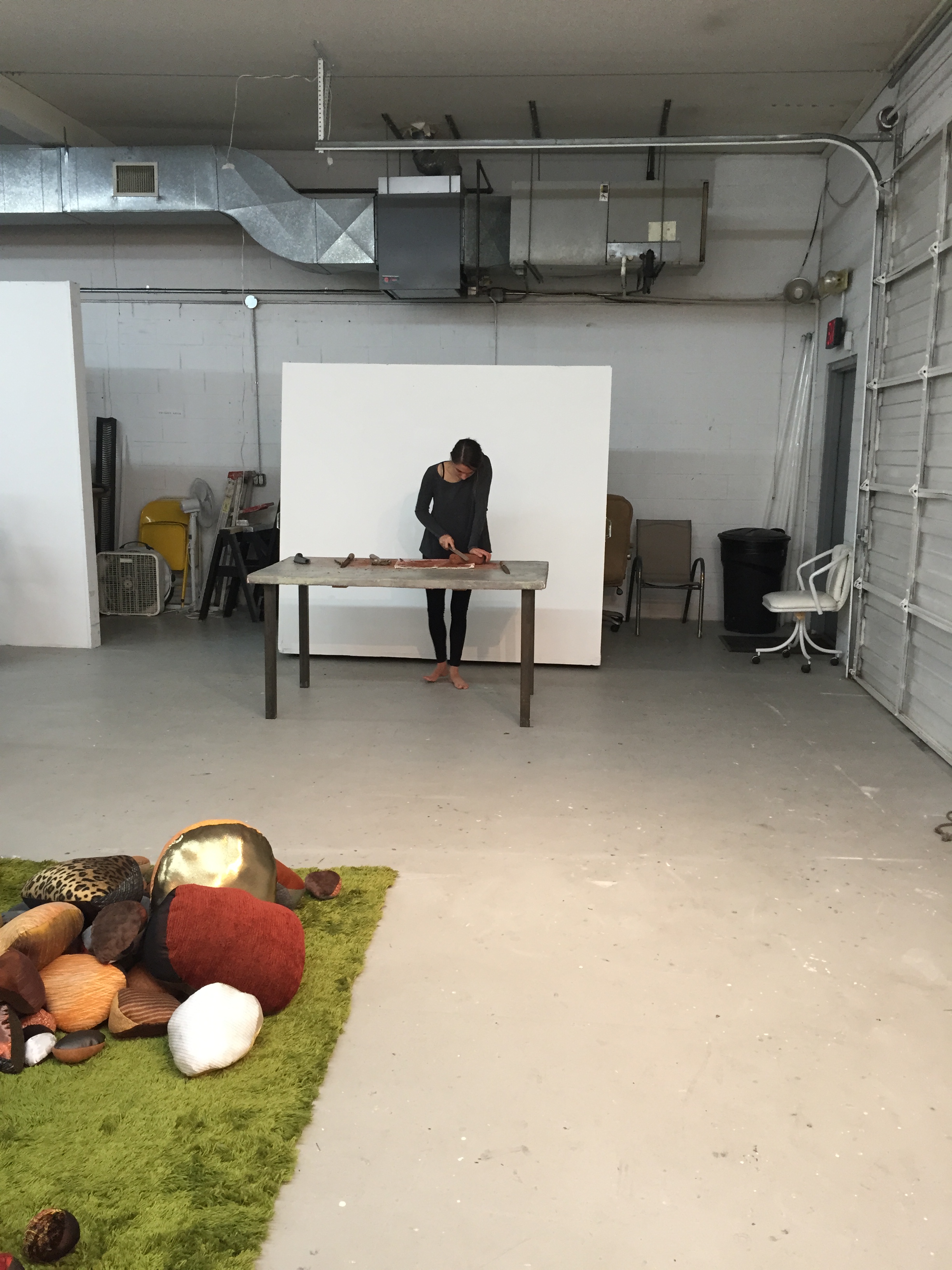
Should one need a respite at any point, Beth Reitmeyer invites participants to sit and snack! Reitmeyer, best known in Nashville for her interactive work and thoughtful presence in the arts scene, thankfully creates a soft space in the form of rock shaped pillows. She hopes her work will provide an area not only for contemplation, but also for conversation. Perhaps even action.